Three conversations that changed how Ian Randall, and Wasafiri, think about the future of development in Africa
Last year, Overseas Development Assistance to Africa dropped faster than ever before, accelerating a long-term trend. This has triggered a period of creative destruction for anyone involved in African development.
The ODA era had us all oriented externally. What will drive progress now?
For organisations like Wasafiri, committed to making good change happen on the continent, how should we reorient ourselves?
I’ve been trying to listen for this emerging future. At every turn, I hear Africans claiming sovereignty over their development. Africa is waiting for no one.
Exhibit 1: A busy dump
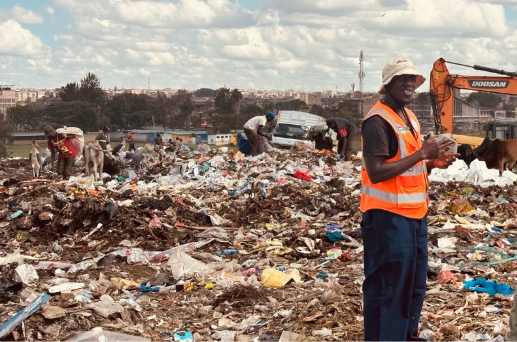
Sam Mburu, in his twenties, is a pro boxer, long-distance runner, and founder of Dandora Green, a social enterprise that works with the waste-pickers at Dandora Dump – the largest waste dump in Kenya. At his invitation, I visited the site.
Five thousand people make their living sifting through Nairobi’s refuse to gather the plastics, metals, organic material, and paper for recycling. Dandora Green collates these pickings, negotiates contracts with buyers, and uses the proceeds to pay the waste-pickers, provide safety equipment, and ensure security.
New legislation is asking consumers to sort their waste at source, and requiring companies to pay for the cost of disposing of their products; generating public revenue that will pay a Ghanaian company to build a modern, efficient, safer sorting plant at Dandora dump.
While clearly progress, these measures will end the informal economy that provides for the waste-pickers. So, Sam is not waiting for anyone. He’s setting up a circular economy centre to retrain his community and create jobs from innovations that will upcycle the sorted waste into products like eco-bricks or t-shirts from recycled plastic.
These are exactly the kind of leaders Wasafiri wants to work with.
Sam Mburu pictured at the Dandora dumpsite in Nairobi
Exhibit 2: A birthday party
I joined our friends at the African Population and Health Research Center for their 25th Birthday Party. With hundreds of expert African researchers, they were joyfully celebrating everyone’s professional journey from research assistants to PhDs to cutting-edge studies that are unlocking a healthier future on the continent.
Wasafiri and APHRC colleagues discussed our next joint project, so I asked if partnering with a foreign institution might strengthen our pitch. But APHRC is waiting for no one.
We have partnered with APHRC on various fronts for years. They know the continent better than outsiders and can deliver high-quality research more affordably.
Exhibit 3: A wonky carrot
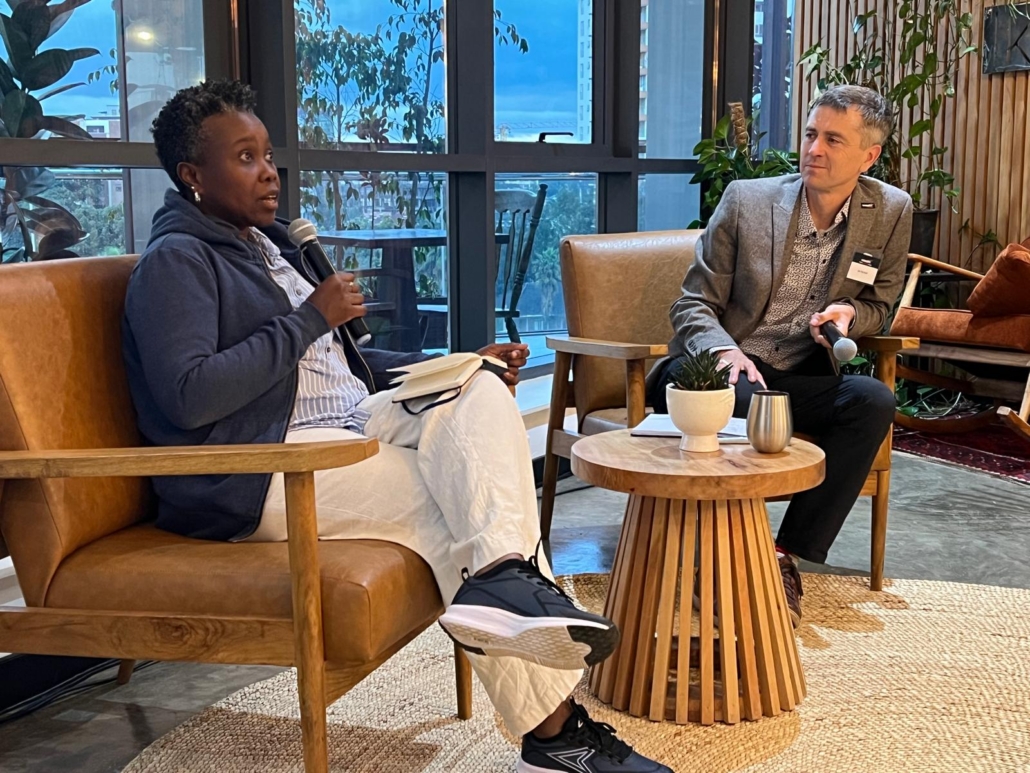
When Sylvia Kuria started her organic farm, she realised, “No one is coming to help me”. Her business would need to work on a purely commercial basis. Now she is Nairobi’s leading provider of organic food.
Through the African Food Fellowship, Sylvia connected with Wasafiri’s work embedding local farmers and traders in school feeding supply chains in Nairobi’s informal settlements and saw an opportunity. To scale, the meals would need to be affordable for families getting by on very low incomes.
Thankfully, Sylvia waits for no one. She and her fellow farmers have wonky carrots that they can’t sell elsewhere. Now these cut-price vegetables have a market, and Mukuru kwa Njenga’s pupils are studying on a full belly.
Sylvia and Ian at a recent Wasafiri Gathering
What this means for all of us
None of this is to minimise the damage. The collapse in ODA has real human costs, nowhere more painfully than for the people with HIV who depend on anti-retroviral drugs now caught in funding gaps.
But it also seems to have popped the collective delusion that positive change can come from agendas defined and resourced in Brussels, London and D.C.
In the emerging paradigm, Africans are claiming sovereignty over development. People once termed beneficiaries are now partners. Leadership is coming from those who inhabit the complexity of the issues and who will sustain change beyond funding cycles or fickle political agendas.
For Wasafiri, as a consultancy committed to Africa’s future, this new era is exciting. We are orienting ourselves to the leaders like Sam and Sylvia and institutions like APHRC, who are making good change happen.
The question is no longer whether Africa is ready. The question is whether the rest of us can keep up.
https://wasafirihub.com/wp-content/uploads/2026/05/Sylvia-and-Ian-at-a-recent-Wasafiri-Gathering.jpg12001600Ian Randallhttp://u05.88f.myftpupload.com/wp-content/uploads/2018/08/Wasafiri-LOGO-1.pngIan Randall2026-05-26 11:44:102026-05-26 14:33:07Waiting for no one: the emerging era of development sovereignty