

Strengthening maternal health systems in northern Kenya
Robinson Karuga & Stella Odhiambo
Latest posts
Taking African food systems leadership to AFSF 2026
Strengthening maternal health systems in northern Kenya
Share:
Through the UK-funded Healthy Women, Children and Newborns programme, Wasafiri supported efforts to strengthen maternal and newborn health systems in Marsabit and Isiolo counties. In this piece, Robinson Karuga reflects on what it takes to strengthen systems in complex environments. In this case, helping different actors work better together to support mothers and newborns in northern Kenya.
Bringing the system into focus
In Kenya’s northern counties, distance can be the difference between life and death.
For mothers experiencing complications during pregnancy or childbirth, reaching a health facility in time is often the biggest challenge. In counties like Marsabit and Isiolo, long travel distances, limited infrastructure and fragile referral systems have historically made maternal emergencies particularly dangerous.
“The distance between the county headquarters and the farthest point of Marsabit is the equivalent of Limuru to Mombasa,” explains Robinson Karuga. “Now imagine a woman developing complications at that farthest point, on rough roads, in an area prone to insecurity, with no specialist within reach.”
Improving maternal and newborn health outcomes in these contexts requires stronger systems: better coordination, clearer data, and faster ways to move patients through the health system when emergencies arise.
In 2024, the UK government launched the Healthy Women, Children and Newborns programme to strengthen maternal and newborn health systems in Kenya. As part of this work, Wasafiri was commissioned to support the programme’s technical design in Marsabit and Isiolo counties.
The focus was not simply to introduce new tools, but to help counties better understand the realities shaping maternal and newborn health outcomes and prioritise practical actions grounded in data.
What Robinson and the team encountered quickly revealed how layered the challenge really was.
Marsabit is Kenya’s largest county by landmass, with dispersed communities and overstretched health facilities, particularly in remote sub-counties where specialist care is limited. Cultural practices also meant that many deliveries still happened at home, with traditional birth attendants often only escalating cases once complications had become severe.
“The figures we were seeing were already devastating,” Robinson says. “But they were just a fraction of the real number. A lot of it slipped through the cracks.”
For Robinson, one of the biggest issues was fragmentation.
“Different partners were doing important work, but there wasn’t always a shared roadmap guiding how those efforts came together,” he explains.
Building around the realities on the ground
The work focused on helping counties prioritise the actions most likely to strengthen maternal and newborn health systems.
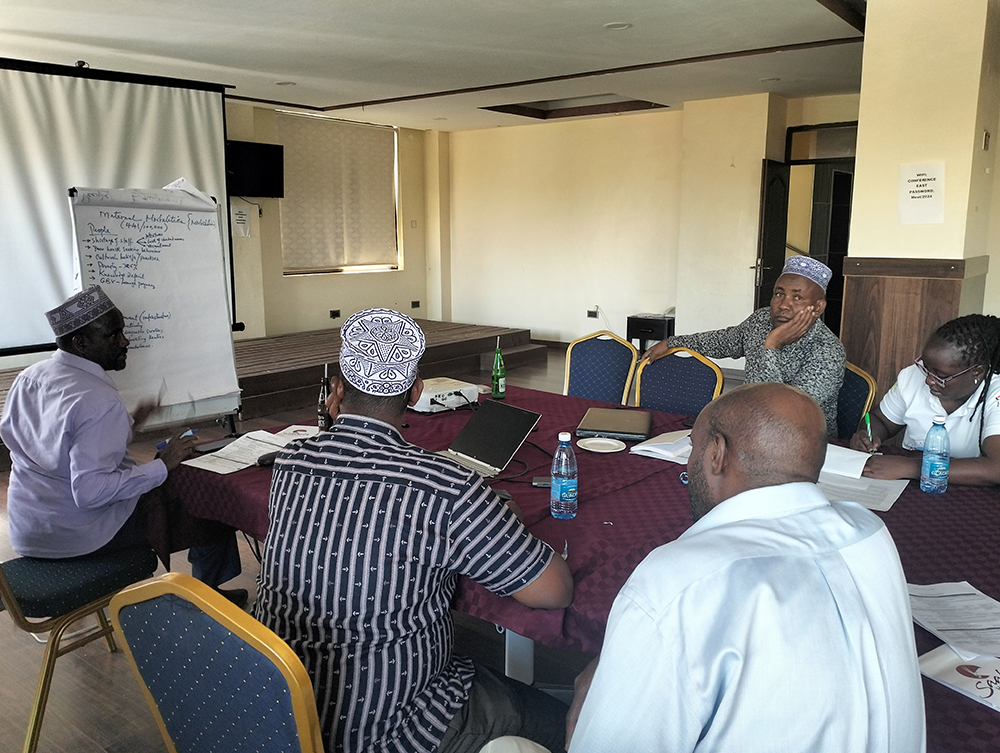
This meant bringing together county officials, health facility staff, programme partners and community representatives to build a clearer picture of the systemic challenges and agree on practical priorities.
Robinson recalls that one of the first steps was sitting down with county health management teams and reviewing the data they already had.
“We didn’t want to use guesswork,” he says. “We asked them to present all the data they had collected over the previous year. From there, we could identify the biggest problems and prioritise them.”
What emerged from those sessions revealed the importance of stronger coordination and more grounded planning processes. In some cases, county plans had become routine exercises rather than practical tools for decision-making, while technical and political actors were not always aligned around the same priorities.
To address this, the work went beyond technical planning. Through facilitated workshops, stakeholder mapping exercises and root cause analysis, Wasafiri helped to develop more practical, costed action plans shaped around local realities.
For Robinson, one important lesson was that maternal health outcomes are influenced by far more than the health sector alone.
“The Ministry of Roads should understand that bad roads are also a maternal health issue,” he reflects. “And agriculture should think about nutrition not just as production, but as survival and thriving. These problems are connected.”
That systems perspective became a central part of the work.
One workshop exercise asked health teams to map all the actors whose decisions influenced maternal health outcomes, from county officials and parliamentarians to infrastructure and agriculture actors.
“They had never really thought about working with roads, with agriculture, or even with MPs through that lens before,” Robinson says. “It was eye-opening.”

Signs of a stronger system
Health systems change gradually, particularly in contexts facing longstanding structural challenges. Robinson is candid about some of the realities the programme encountered.
During parts of the project, staffing and resource constraints made it difficult for some county teams to consistently participate in planning processes. At the same time, many of the challenges being addressed had developed over many years and could not realistically be resolved through a single intervention.
“Sometimes the best thing you can do is plant seeds and create a critical mass of people who want to solve the problem. But these things require time."
Robinson Karuga
Even so, several of the approaches supported through the programme continue to shape maternal and newborn health efforts in northern Kenya.
In recent years, Kenya has expanded investment in emergency maternal referral systems such as m-Mama, a digital transport coordination model designed to reduce delays for mothers experiencing complications during pregnancy and childbirth.
At county level, investments in maternal health infrastructure have also continued. In Marsabit, the county government recently opened a new maternity wing at Laisamis Hospital, including a neonatal unit and surgical theatre intended to improve access to emergency maternal care in remote areas.
At the same time, digital monitoring systems are becoming increasingly central to maternal health delivery across Kenya, helping counties strengthen visibility of maternal and newborn health indicators and improve decision-making.
For Robinson, these developments reinforce an important lesson from the work in Marsabit and Isiolo.
“Tools alone don’t transform health systems,” he explains. “What matters is creating processes that help people align around shared priorities and act on better information.”
Why systems work matters
Maternal and newborn health challenges in remote regions rarely have simple solutions. They require coordination between governments, health facilities, communities, and development partners, often across vast and difficult landscapes.
Programmes like this highlight how technical support, when focused on system design and collaboration, can help create the foundations for longer-term change.
And while progress can be uneven, the experience in Marsabit and Isiolo offers an important reminder: strengthening the systems that support maternal health can ultimately save lives.
Work like this highlights how thoughtful system design can help complex initiatives move from ambition to coordinated action.
If you are working to design or strengthen programmes that aim to deliver lasting impact, Wasafiri would welcome a conversation.
Photo by Meshack Enock Mwakibuja


