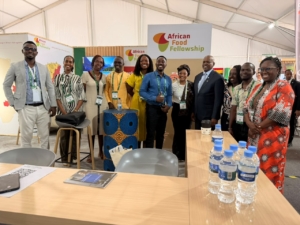
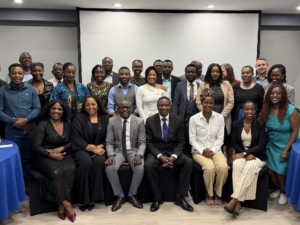
Stella, George and Ian

Wasafiri’s leadership transition is rooted where our work is

Over the past decade, Wasafiri has grown into a trusted partner for systems change work across Africa and beyond. By 2025, more than 90% of our work and our team was based on the continent. That shift had already begun to shape how we worked, who we partnered with, and what we were learning about how meaningful change actually happens.

In early August 2025, we aligned our leadership with this reality. This leadership transition marked a new chapter for Wasafiri. It reflected a long-held ambition to root our leadership, voice, and decision-making in the places where the systems we work on are lived and shaped every day.

A legacy that made this possible

This moment built on the stewardship of Alex Rees, who led Wasafiri as Managing Director through a period of growth, learning, and increasing impact. Under his leadership, Wasafiri strengthened its reputation as a consultancy grounded in systems thinking and committed to making good change happen, particularly across Africa.

That legacy included a clear strategic direction: as our work and team increasingly centred on Africa, so too should our leadership. Alex’s transition out of his executive role and into an advisory position created space for that ambition to fully take shape. We remain deeply grateful for his leadership and continue to benefit from his guidance in an advisory capacity.

George and Ian

Leadership rooted in the region

Following this transition, George Kaburu and Ian Randall stepped into strategic leadership roles to lead Wasafiri’s next phase.

George Kaburu took on the role of Executive Director (Operations), leading our consultancy work and team from our Nairobi headquarters. Ian Randall, a founder of Wasafiri, continues as Executive Director (Strategy), guiding our offer to clients and partners.

Together, they represent a leadership model that is globally connected, but with proximity to the communities and organisations we engage with across Africa.

As George reflected at the time, “I am looking forward to working with such a talented and hugely experienced team, working with clients and partners to solve some of the world’s most complex problems.”

Localisation matters for systems change

For donors and practitioners working in systems change, the importance of place-based approaches is increasingly clear. Systems are shaped by history, relationships, culture, and lived experience. Being close to communities, institutions, and partners is a practical choice.

Locating leadership in Kenya has strengthened our ability to listen more closely to local and regional actors and respond more appropriately to emerging dynamics. From our Nairobi headquarters, the transition affirmed what had always been our intended trajectory: to move our centre of gravity closer to the systems and communities we serve.

We are proud of this transition. It was aligned with our purpose, and it continues to position us to support ambitious systems change efforts across the region.

Share: