
In conversation with Benedict Wambua: Making MEL work in the Global South

Latest posts

Share:
Monitoring, Evaluation and Learning (MEL) is often seen as a neat, technical process led by data and focused on ticking the right boxes. But on the ground, especially in African contexts with complex, shifting realities, change is rarely that tidy.
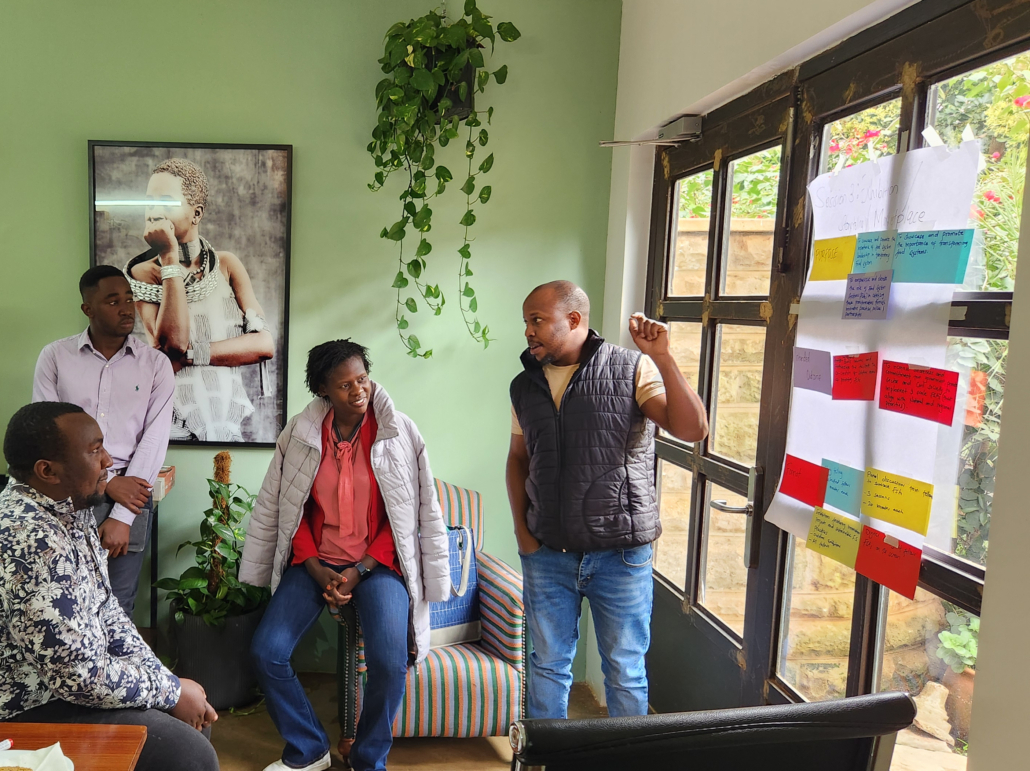
Monitoring, Evaluation and Learning (MEL) often leans heavily on donor-driven frameworks, but in practice, it plays out in far more complex and context-specific ways. I speak with Benedict Wambua, a seasoned MEL expert, who shares reflections on what it takes to shift MEL from a box-ticking exercise shaped by external priorities to a practical, grounded approach that helps organisations, especially in the Global South, respond to real-world challenges and make better decisions for lasting impact. Here is our conversation:
In your experience, what tends to be misunderstood or overlooked about MEL in African contexts?
Like most other places, in Africa quantitative data often takes precedence over qualitative insights. But local knowledge, such as the different ways that communities define success, can reveal much more about the real change taking place.
Unfortunately, these localised insights often differ from what donors expect. Lived experiences and personal accounts matter, yet the voices of those most affected are often left out or included only as a formality.
You've worked across diverse sectors. What have you learned about adapting MEL to fit these different spaces?
Working across sectors like food systems, climate, finance, and humanitarian response, I’ve learned that MEL really needs to be adaptable and context-sensitive. You know, there’s no one-size-fits-all approach.
Embracing complexity-aware methods like outcome harvesting, systems mapping, and contribution analysis helps capture the nuances of change in complex and dynamic problems.
Going forward, I also think shifting emphasis from accountability to learning needs to become more mainstream MEL practice.
Lastly, I believe it’s critically important to understand the diverse ways in which data is available and used across sectors. All this will help teams make better, more informed decisions.
Treat learning as equally valuable as measurement.
How do you ensure that MEL is not just about reporting to donors, but that it actually supports learning and decision-making for the teams implementing the work?
In complex systems like food transformation, where change takes time and is rarely linear, MEL must be designed to surface insights that matter on the ground. We should treat learning as equally valuable as the measurement.
In the African Food Fellowship, for example, we prioritise learning over proving direct impact or attribution. We look at how Fellows influence systems, shift narratives, build connections, and spark innovation. We use reflection sessions, peer-to-peer feedback, learning questions, and adaptive planning techniques.
These methods allow MEL to track change in a way that is responsive, inclusive, and they support decision-making that’s more informed and aligned with Fellows’ real experiences.
What are some of the tensions you’ve faced when working with donor-driven frameworks that don’t fully reflect local realities?
Their limited flexibility! There’s usually a strong emphasis on strict adherence to pre-approved plans, indicators, and budgets. This can make it hard for programs to adjust when things change or new learning comes up.
Short project cycles and the resulting stop-start nature also break momentum. By the time teams build trust, understand the context, and generate early insights, the project may already be ending. This makes it hard to sustain learning or track long-term impact.
Bridging this gap needs open, ongoing dialogue with donors and a shared commitment to flexibility, local context, and learning.
Can you share a time when MEL directly contributed to a shift in a programme or strategy? What made that possible?
In a climate-focused program I worked on, MEL directly contributed to a strategic shift when we realised through learning that most businesses were using water-related loans primarily to meet ESG (Environmental, Social, and Governance) criteria rather than for direct water conservation activities.
Initially, our indicators focused narrowly on loan disbursement volumes, but ongoing reflection and data analysis revealed this disconnect.
What made this shift possible was a MEL approach that emphasised learning over compliance, with regular spaces for dialogue between MEL teams and program leaders. By digging deeper into the data and engaging stakeholders, we co-created new climate indicators that better captured how water financing was actually driving ESG commitments and influencing business behaviour.
This resulted in a handbook on ESG and quality standards, providing practical guidance to businesses and financiers. It showed how adaptive MEL that’s grounded in continuous learning and stakeholder engagement can lead to more meaningful program adjustments and support sustainable impact.
Adaptive MEL is about being responsive to changing contexts and empowering teams, especially those closest to the work.
How about gender and social inclusion, how do you intergrade that in MEL more meaningfully?
I try to work closely with communities to understand what their social structure and power dynamics are, and what inclusion means to them. I also use storytelling, oral history, and other methods that reflect more African perspectives.
I also try to amplify voices often overlooked or marginalized. By prioritizing learning and adaptation rather than just compliance, MEL can reveal the nuanced ways gender and social inclusion influence programs, supporting more equitable and transformative outcomes that truly resonate with the communities involved.
What would you say to a young African MEL professional who wants to move beyond compliance and contribute to more grounded, useful evaluations?
I’d say don’t let anyone reduce your role to just tracking indicators or filling templates. You’re in a unique position to help people see what’s working, what’s not, and what truly matters. As a MEL professional, you stand at the crossroads of evidence, decision-making, and change – be bold. Most importantly of all, challenge assumptions. If you make that a habit, you’ll begin to notice that your evaluations are truly supporting impact, learning and better, more inclusive decision-making.
Benedict Wambua is a MEL practitioner working across Africa and Asia in sustainable finance, climate, humanitarian response, and food systems. He currently supports the African Food Fellowship, helping organisations build MEL systems that prioritise learning, adaptation, and inclusion.
Read Wasafiri’s evolving thinking on MEL for systems change.


