

Meet the girl who wanted to build roads (and factories)
Meet the girl who wanted to build roads (and factories)

Gacoki Kipruto & Stella Odhiambo
Latest posts
Taking African food systems leadership to AFSF 2026
October 8, 2026
Strengthening maternal health systems in northern Kenya
August 18, 2026
Share:
A glimpse into the mind and work of Gacoki Kipruto, Wasafiri’s new Partnerships Manager.
When Gacoki Kipruto was eight years old, she stood at her aunt’s home in Othaya, central Kenya. Plum trees were heavy with fruit, so abundant they couldn’t be eaten, sold, or given away. At the very same time, other parts of Kenya were facing hunger. In her mind, she could see the solution clearly. It was simple: take the food to where it was needed. Problem solved, right?
“Unfortunately, there are no roads,” she was told.
And that answer stayed with her.
It sparked two early ambitions for Gacoki: to one day build the roads that could connect food to people, and to start a plum jam factory so that nothing would go to waste. It was her first encounter with a broken system. And her first instinct was to fix it.
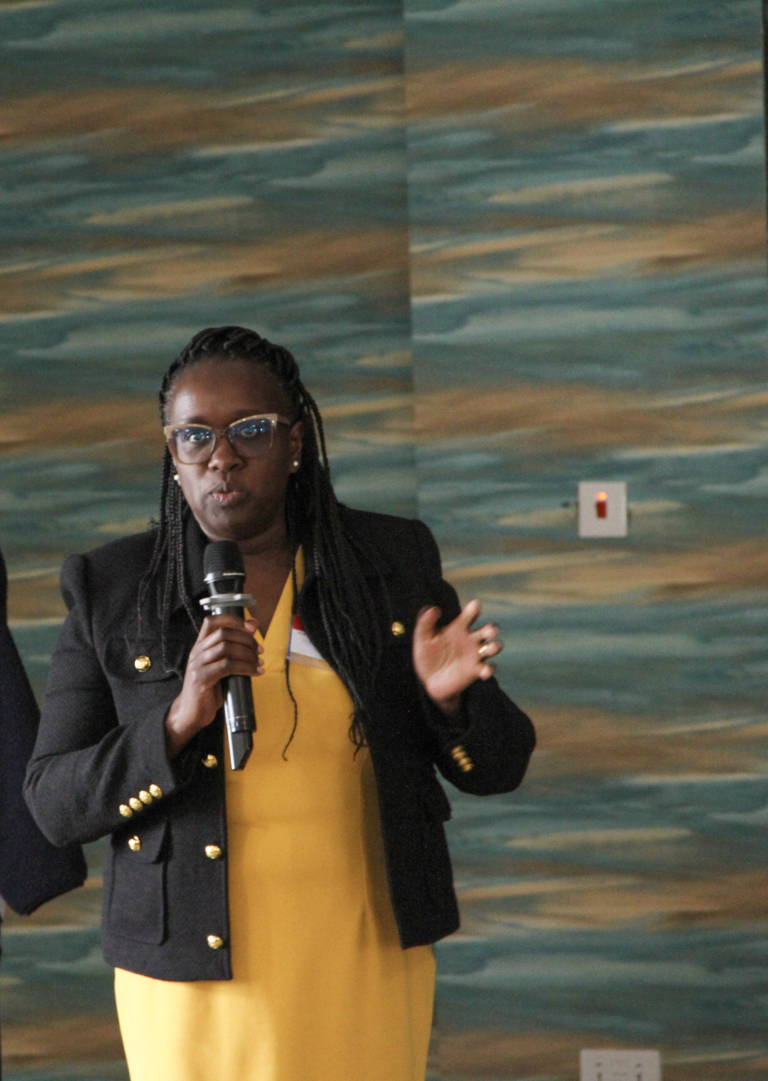
Today, as Partnerships Manager at Wasafiri and Kenya Country Lead at the African Food Fellowship (AFF), Gacoki is doing the work of connecting what exists but doesn’t yet work together.
Learning to see the whole system
Gacoki’s path into systems change wasn’t linear, but that was intentional. Trained in marketing, she quickly found herself drawn to shaping how ideas, services, and solutions reach the people who need them most.
Her early work with organisations like the Eastern African Farmers Federation introduced her to the mechanics of development, such as value chains, financial inclusion, and the quiet complexity of making markets work for those often left out.
Over time, her work spanned agriculture, renewable energy, governance, and inclusive finance. This cross-sector experience gave her the ability to see patterns across systems and identify where connections are missing. An ability she now relies on deeply.
“I’m able to look at a problem from different POVs at once,” she says. “Not just as an agriculture issue, or a nutrition issue, but where those things meet.”
That ability to see the whole while working within the parts is at the heart of her role today.
Bringing people together to move change
At Wasafiri, Gacoki operates at the intersection of relationships and results. She describes Wasafiri as a “first responder”, the one you call when a system isn’t working.
Her work is to bring the right people into the room, help them see the system more clearly, and support them to move forward together by creating the conditions for new discovery.
“I really enjoy facilitation,” she says enthusiastically. “Bringing people to the table and helping them develop their own thinking to discover what’s possible – I love that.”
It’s a style that runs counter to more direct approaches. Gacoki asks the questions that unlock clarity, then helps shape that clarity into action. This approach is amplified through her work with the African Food Fellowship, where she works closely with a diverse network of leaders across Kenya and Africa’s food system. There, she spots opportunities for collaboration, linking ideas, and creating the kind of synergy where “one plus one becomes five.”
What makes her particularly effective is her ability to move fluidly between worlds. She is as comfortable speaking with policymakers and donors as she is with farmers and grassroots organisations. It’s a skill, she says, that is built from curiosity, a trait she names as central to who she is.
“Sometimes you’re a connector. Sometimes you’re documenting what’s working. Sometimes you’re amplifying it,” she explains. “Each person plays their role, but in concert with others.”
What lies ahead?
Looking ahead, Gacoki is energised by the growing recognition that complex challenges cannot be solved in isolation. “There is a sense of urgency about how to respond to a rapidly changing world,” she says.
“I want Wasafiri to be the place people turn to when they need to make sense of complexity, and when they need to think through what to do next.”
It’s a vision that echoes the thinking of that eight-year-old girl, standing between abundance and need, asking a simple question: how do we connect the two?

