Entries by Aisha Adan

,

Why we believe lived experience should shape decisions

Why we believe lived experience should shape decisions

Lots of programmes struggle because the people closest to the problem rarely shape the decisions intended to solve it. In this conversation with Wasafiri’s Inclusion Lead Aisha Adan, we explore why meaningful inclusion matters for systems change.

Across our development and systems change work, participation is often treated as evidence of inclusion. Communities are consulted, workshops are held, and feedback is gathered. Yet, as Aisha Adan explains, being present in a room does not necessarily mean having influence over the decisions being made.

For Aisha, one of the biggest reasons programmes struggle to create lasting change is that they are often designed far from the realities they aim to address. Decisions are shaped by technical expertise, institutional incentives and donor timelines, while the lived experiences of those most affected remain peripheral to strategy and action.

“In complex systems, what really matters is power,” Aisha reflects. “And the people most affected by these problems are often the least influential over programme design, resource allocation and decision-making processes.”

Why isn’t participation enough?

Aisha believes that many institutions still misunderstand what meaningful inclusion requires. For Wasafiri, strengthening inclusion in systems change means creating the conditions for historically excluded groups to genuinely shape priorities, decisions and resources.

“It’s not about how many people are invited into a meeting,” Aisha explains. “It’s about whether those people can meaningfully influence what happens next.”

This requires recognising that different groups experience systems differently and operate within unequal power structures. It also requires treating lived experience as a legitimate and valuable form of evidence alongside technical expertise and data.

From a systems perspective, no single actor holds a complete picture. Better strategies emerge when diverse perspectives help reveal the political realities, relationships and practical conditions shaping how systems actually function.
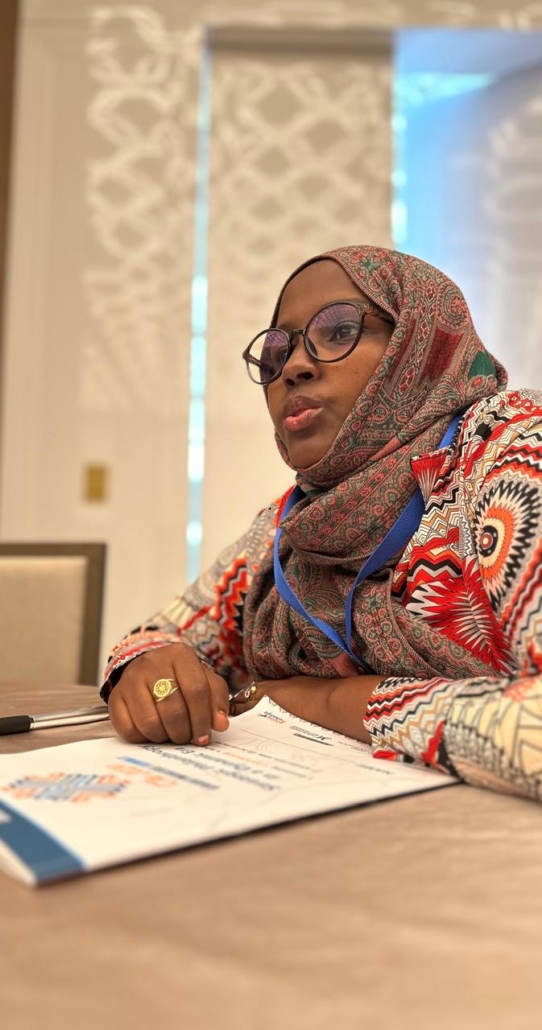
Aisha
Aisha Adan

What the communities in northern and coastal Kenya showed us

Drawing on Wasafiri’s work through the Nawiri programme in northern Kenya and later experiences connected to the CREATE initiative on the coast of Kenya, Aisha reflected on how exclusion shapes programme decisions and outcomes.

The work revealed that exclusion was political, geographic, generational and gendered. Yet women, young people and pastoralist communities who held deep insight into the drivers of vulnerability and conflict remained excluded from key decision-making spaces.

Through community-led research and dialogue processes, Wasafiri also saw how lived experience frequently challenged institutional assumptions.

Communities highlighted how insecurity, mobility and weak trust in institutions shaped the choices they made and influenced how they navigated everyday realities. These perspectives often exposed dimensions of the system that external actors had poorly understood.

For Aisha, the experience reinforced a critical lesson: even well-intentioned programmes risk reinforcing the very dynamics they hope to change when they fail to understand how power operates within a system, whose knowledge counts, and who gets excluded from shaping solutions.

How Wasafiri works in practice

In practice, Wasafiri supports partners to design processes that bring diverse actors into shared learning and decision-making spaces, particularly those often excluded from formal strategy discussions.

This includes participatory research, systems mapping, community dialogue processes, co-design workshops and learning structures that connect lived experience directly to leadership and governance conversations.

Importantly, Wasafiri does not treat inclusion as a standalone activity. It is embedded into how we develop strategies and gather evidence, too.

Across our work in food systems, peacebuilding and climate, we help organisations spend more time listening to the people closest to the problem and finding practical ways to include them in decisions and action.

Why good ideas still fail

According to Aisha, one of the greatest risks organisations face is designing programmes that appear strong on paper but fail in practice because they are disconnected from how systems actually function.

When these realities are ignored, programmes can unintentionally deepen mistrust or create solutions that communities neither own nor care to sustain.

Aisha also notes that organisations frequently miss critical intelligence when lived experience is excluded from decision-making. People closest to the problem often understand emerging tensions, unintended consequences and windows of opportunity long before institutions do.

Ignoring these perspectives weakens adaptability over time.

What changes when people shape the decisions that affect them

Rather than designing solutions for communities, organisations could begin shaping solutions with them. According to Aisha, this shift creates more resilient partnerships over time. It also improves the quality of decision-making itself because strategies become rooted in a deeper understanding of how systems actually behave, rather than how institutions assume they should behave.

For Wasafiri, this is ultimately what strengthening inclusion for systems change is about: helping people work together, learn as they go, and keep adapting in ways that can create lasting change.

Work like this shows how bringing lived experience and power dynamics into the heart of decision-making can strengthen the effectiveness of complex initiatives. If you are working to ensure programmes are shaped by the realities of those they aim to serve, Wasafiri would love to be part of the conversation. Please reach out to Aisha Adan.

Share:


,

Wasafiri’s License to Lead programme enters year two

Wasafiri’s License to Lead programme enters year two

Aisha Adan was the pioneering candidate for Licence to Lead. She sits down with Stella Odhiambo to talk about the DEI initiative that’s advancing leadership development for Wasafiri’s African and Africa-based staff.

Having recently completed the programme, I know that License to Lead (L2L) has benefited me tremendously. So, imagine my excitement when the second candidate was announced! L2L is designed to not only nurture much-needed leadership skills but also to ensure that our leadership reflects the diversity of the communities we serve. It’s a thrilling time as we continue this important work.

In my conversation with Stella, I wanted to understand her motivations and aspirations as she embarks on this journey. Here’s what she shared.

Well, congratulations, Stella! What motivated you to apply for Licence to Lead?

Thank you, Aisha! As Communications Manager at Wasafiri for the past two years I’ve am lucky enough to interact with colleagues and consultants across the business. These are some of the most inspiring, brilliant and passionate people I have ever worked with. 

The more I learn from them and dive into my role which I really enjoy, the more I realise I want to step up my game. L2L feels like the perfect opportunity to do that—to learn, grow, and become a stronger and more capable leader.

What’s the one thing that excites you the most as you begin this programme?

With a background in media, publishing, and communications, I’m looking forward to stepping out of my comfort zone, picking up new leadership skills, and getting a taste of what it’s like to be at the helm of strategic decision-making at an organisation like Wasafiri.

L2L is a good next step in my journey. I will not only learn how to navigate challenges confidently but also prepare myself for my future aspirations.

What specific leadership skills are you hoping to develop through L2L?

I’m looking to level up my skills in a few key areas: team management, decision-making, and strategic thinking.

I know that leading a team involves more than just having the answers—it’s about inspiring others to bring their best selves to the table and work toward a shared vision. I’d love to get to the point where I can walk into any situation, make clear and confident decisions, and guide a team without feeling like I’m just figuring it out as I go.

CKW_7505 (11)

What three words best describe Stella?

Driven, compassionate, and underestimated.

Who has been your biggest inspiration and influence in life and what lessons have you learnt from them?

I draw immense inspiration from people who come from the most shocking beginnings to not only survive but thrive and surpass all expectations. Actress Viola Davis springs to mind. Look up her story.

Looking ahead what do you hope your legacy to be both personally and professionally?

Personally, I hope to be remembered as someone who brought people together and encoureged others not to sweat the small stuff – someone who infused positivity into every interaction.

Professionally, I want to inspire others to tackle complexity with creativity and passion.

Well, congratulations again, Stella. Enjoy it. I cannot wait to compare notes and see what this does for your growth!

Thank you – neither can I. Watch this space, same time next year.

Aisha was the inaugural candidate for Licence to Lead and is currently Wasafiri’s Peace & Inclusion Senior Manager. Read about her L2L journey here.

Share:


,

Diversity in leadership: Aisha’s License to Lead journey

Diversity in leadership: Aisha’s License to Lead journey

Aisha Adan, Wasafiri’s Inclusion and Peace Senior Manager, shares her journey through the License to Lead (L2L) pilot programme. A programme designed to cultivate diverse leadership within Wasafiri.

Introduction

Recently, I had the privilege of completing Wasafiri’s License to Lead (L2L) program, a transformative experience that has significantly impacted my leadership journey.

Designed to equip emerging leaders from Africa with essential management skills, L2L has set a foundation for personal growth and professional impact.

Wasafiri launched the L2L program with a commitment to increasing diversity, equity, and inclusion within our leadership. Recognising the gap in leadership opportunities for Africa-based staff, L2L builds critical skills in strategic decision-making, transfers institutional knowledge, and empowers employees in participatory roles.

This blog reflects on how L2L has impacted me personally and professionally.

Reflections on License to Lead and its Impact

At its core, L2L is about creating a resilient, adaptable team structure that empowers each member to play a participatory role in decision-making. This unique approach felt refreshingly aligned with Wasafiri’s principles of adaptive organisation and responsive leadership.

Through the program, I had the chance to dive into various critical topics: from business strategy to communications. Under Business Strategy, for instance, I gained a deeper understanding of what it takes to formulate and execute a strategy within an organisation and how influential leadership can drive that strategy forward. This set the stage for practical discussions on Commercial and Business Development, where I gained insight for business growth and development—skills that are crucial as we seek to make a bigger impact.

Other essential things I learned were foundational knowledge of financial management, something that is critical in project planning and ensuring accuracy in operations, and how teamwork and diverse strengths can elevate project management. Even the Communications sessions covered the art of strategic messaging, helping me align our communications with Wasafiri’s goals to build trust and clarity both internally and externally.

One of the standout aspects of L2L was its emphasis on leadership agility. The program encouraged me to think on my feet, understand various perspectives, and make collaborative decisions.

This training has already made an impact on my role; I’ve taken on complex projects that required adaptive thinking and the ability to balance diverse team dynamics. The positive feedback from colleagues on these projects has been a meaningful reminder of how far I’ve come, as well as how much potential the L2L program has unlocked in me.

Aisha

Personal growth

One of the program’s biggest gifts has been a new sense of confidence. I’ve become more comfortable in navigating complex situations, contributing to strategic discussions, and trusting my instincts in leadership roles. It has fundamentally shifted my mindset to one that is adaptable and resilient, which I believe will serve me in any future role or challenge.

Looking forward, I’m excited to carry these skills with me as I take on greater leadership responsibilities. As someone who aspires to drive impactful, sustainable development, I know that my L2L experience will continue to guide me. As the founder of a nonprofit, the lessons learned here—from strategy development to financial planning—are not only valuable to Wasafiri but are also transferable to any future initiatives I pursue.

I am truly grateful to Wasafiri for this invaluable opportunity and for the strong focus on DEI, which has opened doors for African and Africa-based staff to move into senior roles. I’m also deeply appreciative of the support from my colleagues, especially Alex, Chiara, Stuart, George, and Stella, who encouraged me throughout this journey.

As I look ahead, I’m excited to keep learning, growing, and contributing to initiatives that lead to positive change.

Share: