Taking African food systems leadership to AFSF 2026


Stella Odhiambo &
Ledama Masidza
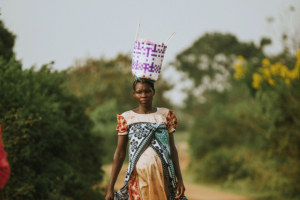
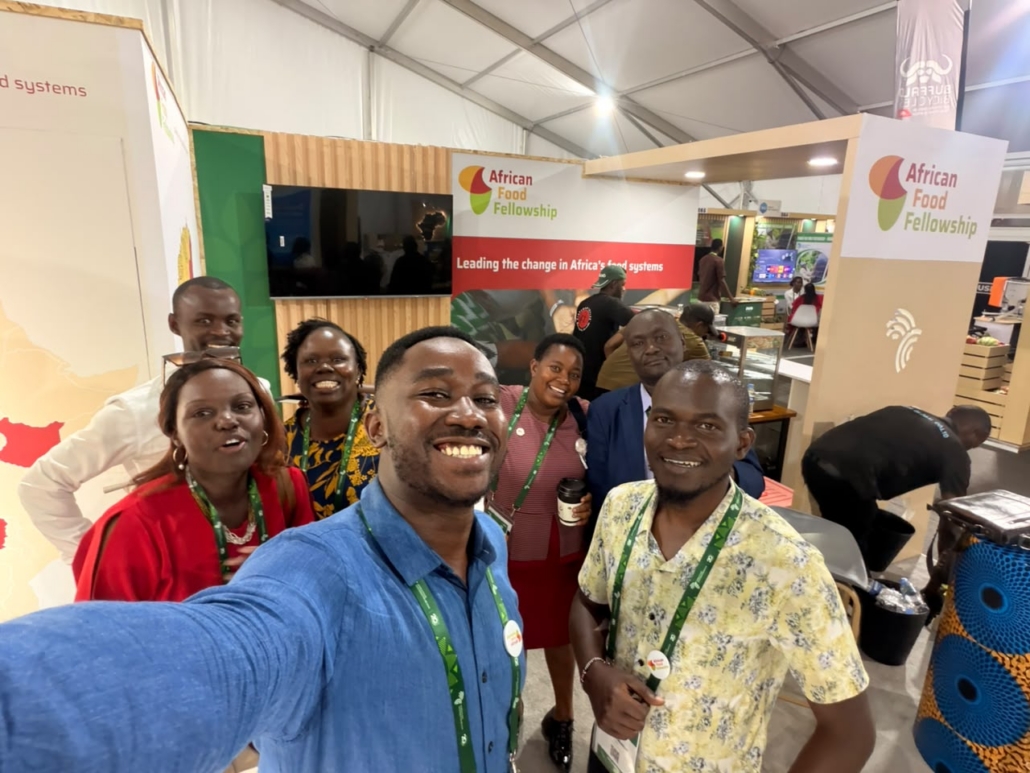
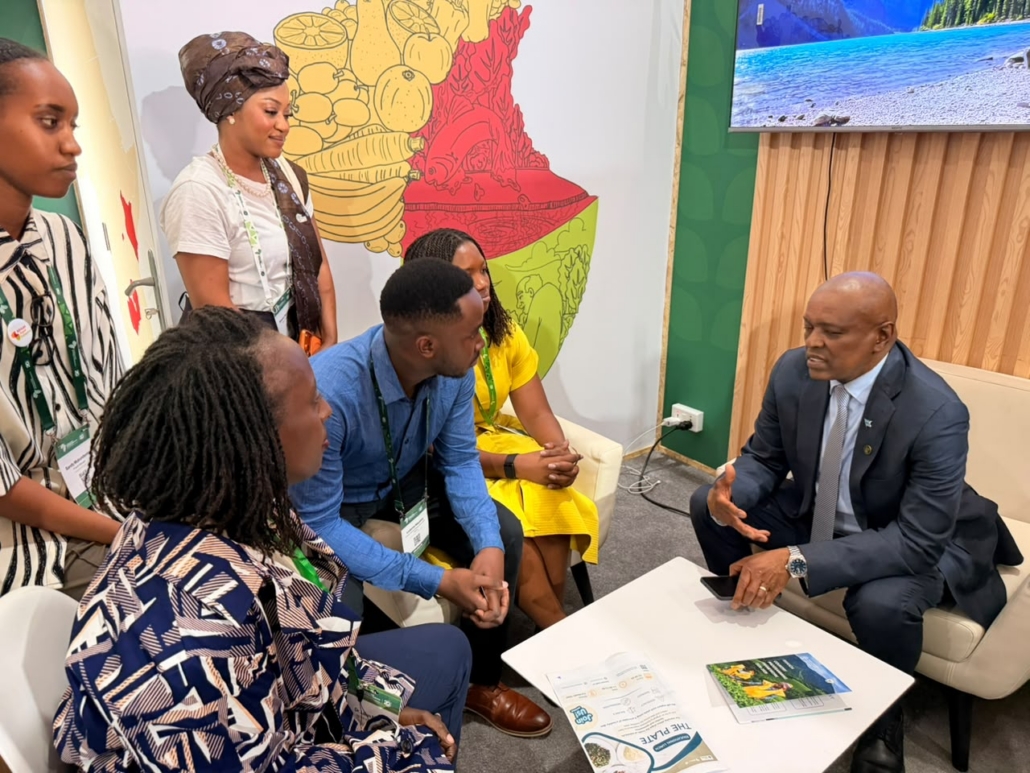
From the exhibition floor to the Youth Dome, our Fellows brought the voices and experience of people leading change across Africa’s food systems into the heart of the Forum.
The Africa Food Systems Forum (AFSF) is one of the biggest gatherings on Africa’s food systems calendar. Through our work with the African Food Fellowship (AFF), this year in Kigali we brought together Fellows, food systems leaders and partners across five packed days. Alongside the Forum itself, which ran from 1 to 4 September, the Africa Food Festival created a space for food, culture and everyday experience to sit next to the policy conversations happening inside.
The week opened with one of its biggest moments: the graduation of 27 Fellows from our 5th Rwanda cohort, held as an AFF side event just before the Forum. It marked another milestone in a growing network of more than 300 food systems leaders across Rwanda, Kenya and Zambia: people working across agriculture, nutrition, markets, climate, policy and other parts of the food system, and increasingly, working together across those boundaries.
There was a booth run by Fellows. Visitors came from across the continent, from Nigeria, The Gambia and Senegal to Uganda and Tanzania. Among those who stopped by to meet our Fellows were His Excellency Mokgweetsi Masisi, former President of Botswana, and Rwanda’s Prime Minister, Dr Justin Nsengiyumva, accompanied by the Minister of Agriculture and Animal Resources, Dr Telesphore Ndabamenye. More than 70 people signed up to stay connected with the Fellowship, and others put a direct question to the team: when is AFF coming to my country?
We also took our Food Systems Leadership Programme to the Youth Dome for an AFF masterclass. Fellows spoke from their own experience of leading change in their part of the food system, which kept the conversation grounded in what leadership looks like day to day.
The thread running through the session was: If Africa is serious about transforming its food systems, it needs to invest in the people who are already doing the work, and give them the leadership skills, relationships and spaces to collaborate. Coming from Fellows living that every day, the message seemed to carry real weight.
Beyond our own spaces, Fellows were active throughout the Forum programme, speaking at sessions and taking part in conversations from school feeding and nutrition to land governance, post-harvest losses and circularity.
We came away with plenty to think about, especially what it takes to turn a growing continental network into collaboration on the ground. We’ll be sharing more of those insights soon. In the meantime, find out more about the Fellowship and the leaders behind it at africanfoodfellowship.org.
There is something quietly significant about where a conversation happens.
For more than a decade, the Our Ocean Conference has gathered governments, scientists, businesses, philanthropies, youth movements and coastal communities to shape the future of the world’s oceans. This year, for the first time, that conversation came to Africa – to Mombasa, on Kenya’s Swahili Coast.
That matters. Not only because of geography, but because some of the most important ocean stories are already being written here.
The theme, “Our Ocean, Our Heritage, Our Future,” carried particular weight on this coastline, where the ocean is not scenery or science alone. It is food, livelihood, culture, history and identity. It is also pressure – warming seas, plastic pollution, declining fisheries, and the uneven promises of a growing blue economy.
For Wasafiri, this was a first, and we arrived the way you do at any new table – ready to listen.
Stepping into ocean work is not a departure from what we do. It is a natural extension of it. Our work has always sat in the messy middle of change, where no single organisation, government department, funder or community can solve a problem alone. We help people make sense of complexity, build coalitions, learn as they act, and turn shared ambition into coordinated action.
The ocean needs exactly this kind of connective work – because marine conservation is not one issue. It is a whole system, tied to food security, local economies, climate resilience, governance and the futures of young people. The ocean simply makes that impossible to ignore.
I came in with my own lens too. I am a Kenyan marine conservationist, food systems practitioner and filmmaker, but much of my work has been about something simpler and harder to measure: helping people, stories and efforts find each other.
Through working with organisations like Oceans Alive and the Kenya Ocean Guardians Network, I have seen how much powerful ocean work already exists here. I have also seen how often it happens in isolation. A community restores a reef. A school builds ocean literacy. A youth group tells new stories. A beach management unit works to strengthen governance – usually with passion, trust and far too little funding.
The challenge is rarely that there is no action. More often, the challenge is that the action is fragmented.
That was one of my strongest reflections from the week. The rooms were full of ambition. Globally, more than 320 new commitments worth roughly US$6.4 billion were announced, and Kenya, as host, made significant pledges of its own.
There were real milestones: the Mombasa Declaration on fisheries and transparency, regional commitments to expand marine protected areas, and growing support for a precautionary pause on deep-sea mining.
These commitments matter. They signal political will, and they can unlock finance, attention and new partnerships. But standing in Mombasa, close to the communities and ecosystems they are meant to serve, one question was unavoidable: how do we make sure they reach the water?
How do they reach the reef, the fisher, the young person looking for a future in ocean work, the woman processing the day’s catch, the small organisation trying to keep a programme alive, the community that protected a place long before it appeared in any policy document?
Some of the most meaningful moments were not on the main stage at all. They were in the exhibition halls and side conversations – between fishers and policymakers, researchers and community groups, youth leaders and funders.
It was powerful to attend a PAKPRO session reframing marine plastic pollution in Kenya’s Coast by placing coastal communities, informal waste actors, women, youth cooperatives, and fisher communities at the centre of the circular economy conversation, not as victims, but as people already leading practical solutions.
What I took from Mombasa is that marine conservation is entering a new chapter. The language is shifting from awareness to delivery, from isolated projects to collaboration, from conservation for communities to conservation with them. But that shift is not guaranteed. It will depend on whether finance becomes genuinely accessible, whether local leadership is recognised as expertise, and whether we are brave enough to ask who benefits from the blue economy – and who carries its costs.
For me, the feeling of the conference was hope with teeth. There was beauty, pride and real energy along the coast. But there was also impatience, the good kind – the kind that says we have had enough elegant language, and now we need to see it reach the water.
Wasafiri’s role in this next chapter is not to arrive with all the answers. It is to help ask better questions, connect the right people, and bring our experience in systems change to a field that urgently needs it.
If systems change begins with relationships, then the conversations we started in Mombasa are only the beginning.
The ocean agenda has come home to Africa. Now the work is to make sure it does not leave communities behind.
And if you are part of this work too – restoring a coastline, telling a new story, holding a fragile programme together – we would love to find each other.
As COP30 unfolds in Belém, Brazil, the world gathers at a pivotal moment for climate action. This year, as I join governments, civil society, Indigenous peoples, and youth gathering to shape our shared future, it is clear that food systems are finally taking their rightful place at the heart of climate discussions.
At Wasafiri, we believe that food connects climate, nature and livelihoods. If we are serious about building a just and resilient world, then transforming food systems must be central to how we act on climate.
It has taken decades for food systems to move from the sidelines of climate diplomacy to the main agenda. This shift reflects a growing understanding that agriculture, nutrition, and land use are inseparable from climate resilience, biodiversity, and equity.
At COP28, food systems were formally acknowledged in the Global Stocktake and the Emirates Declaration on Sustainable Agriculture, Resilient Food Systems, and Climate Action, endorsed by over 150 countries. COP29 maintained momentum, but lacked coherence. Now, attending COP30 in person, I see a strategic opportunity to embed food systems into climate action.
Under Brazil’s Action Agenda, food systems feature as one of six thematic axes, specifically Axis 3: Transforming Agriculture and Food Systems. This is a major breakthrough, recognising that food systems are also cultural, and political.
Axis 3 focuses on three pillars:
Several developments at COP30 are set to shape how food systems are integrated into climate action:
Kenya enters COP30 from a position of both urgency and opportunity. Climate impacts are already reshaping agriculture and livelihoods, but communities are actively innovating in response. The food systems agenda at COP30 offers a chance to elevate Kenya’s models of resilience, regeneration, and justice.
Key priorities include:
COP30 represent an opportunity to redefine what climate ambition looks like. Food systems sit at the intersection of the biggest global challenges we face: hunger, biodiversity loss, and the climate crisis.
By centring food systems, COP30 can turn climate commitments into concrete, equitable action. The task now is to ensure that the promises made in Belém translate into resilience for farmers, nourishment for communities, and regeneration for the planet. “The transformation we need won’t come from any single policy or actor. It will come from how governments, farmers, financiers, and communities work together to reimagine food systems as engines of resilience and regeneration” adds Ian Randall, Wasafiri’s Director.
An interview with Ledama Masidza
When you meet Ledama Masidza, you quickly sense his deep bond with the ocean.
A Marine Conservationist, Indigenous Food Systems Advocate, and natural storyteller, he has dedicated his young and impressive career to working with fishing communities to restore balance between livelihoods and marine life.
Among his proudest achievements is helping secure user rights for a 12,000-hectare co-managed marine area on Kenya’s coast, an effort that has drawn global attention.
Ledama’s journey into conservation began in his childhood, watching how coastal communities depended on the ocean for survival while struggling to keep it alive. That early awareness grew into a passion he carried through university and into his first role in Kuruwitu, a small fishing village in Kilifi County. It was there, he says, that “the ocean became my first classroom in leadership.”
In this conversation with Stella Odhiambo, Ledama shares what he learned in Kuruwitu, why community ownership matters, and how applying a systems approach reveals that youth and local communities already hold the keys to lasting solutions.

The ocean was my first classroom in leadership. Right after graduating, I found myself in Kuruwitu, a small coastal village in Kilifi County, some 36 or so kilometres from Mombasa, Kenya.
I was working as an environmental program manager, supporting a 30-hectare Locally Managed Marine Area. I would spend long hours restoring coral, doing research, and filming this incredible sanctuary.
Inside, life flourished. Outside, I would find discarded nets, turtles trapped, and reefs stripped bare. It broke my heart. I knew we couldn’t only protect small pockets of ocean…we had to restore the wider seascape. And that could only happen with the community fully in the lead.
By 1999, the Kuruwitu fishery had collapsed. 5,000 metric tonnes of fish gone. Regulations existed but were weakly enforced. Beach Management Units, which were supposed to lead governance, had no resources, no training, no leadership support. And unlike land, the ocean has no title deeds.
Fish swim across boundaries. How do you secure tenure over food that moves? That reality pushed me to see conservation differently: you can’t eat conservation. Real conservation is about both biodiversity and livelihoods.
Families were struggling. Fishers would go out to sea and return empty-handed. Young people had little reason to see fishing as a viable future. Without urgent action, both culture and ecology were at risk. That urgency forced us to ask: what would it take to build a community-led system that lasts?

Absolutely. Supported by Oceans Alive and the Kuruwitu Beach Management Unit, the steps we took align closely with the five dimensions of Systemcraft. My understanding of this approach deepened when I became a fellow of the African Food Fellowship and saw these same dimensions applied not just to oceans, but to food systems across Africa. I saw it lead to real environmental impact.
It began with organising for collaboration. The Beach Management Unit needed legitimacy. So I helped them hold elections. Yes, 21-year-old me! We had to update their constitution and secure legal standing. Without that collective structure, nothing else could have taken root.
Then we had to set the direction. Mapping the fishing grounds with researchers gave the community a clear picture of their territory. Seeing it on a map created a shared sense of responsibility: this is ours to protect.
From there, we turned to harnessing collective intelligence. Not so simple when wary NGO’s refused to share their data with us. We were looking at 1-year-old studies. So we carried out new surveys with fishers, co-creating a baseline of data. This wasn’t abstract research; it was knowledge the community could use to guide decisions.
To make it matter, we brought everyone into the process. I’ll never forget taking stakeholders snorkelling: inside the sanctuary, the reefs teemed with life; outside, they were barren. That single experience spoke louder than any report. I believe it fanned a shared urgency for action.
Finally, we had to change the incentives. Together, the community drafted bylaws on fishing gear, enforcement, and surveillance. It wasn’t easy – because in truth, a broken system works for some people or some of the time. There was definitely some resistance to change, and debates often grew heated. But over time, the rules began to shift behaviours, rewarding stewardship over short-term gain, and giving fishers a reason to protect rather than exploit.
And when the government granted official recognition, it brought us full circle to collaboration again. This time on a larger scale. The community now had both the authority and the partnerships to act as true stewards of their ocean.

Because only the community can balance survival with stewardship. Outsiders may bring funding or science, but if families go hungry, no project will last. Ownership transforms conservation from an external agenda into a practice rooted in culture and livelihood.
The lesson is this: solutions already exist within communities. Youth and local leaders know their realities better than anyone else. With space, knowledge, and resources, they can transform entire systems, whether fisheries, forests, or food systems.
Collective System Action means no single project or actor can drive transformation alone. Change requires shifting incentives, coordinating coalitions, setting clear direction, making it matter to people’s lives, and continuously learning. That’s what we lived through in Kuruwitu. It wasn’t a linear project; it was a systems journey.

Because we’ve already shown it’s possible. What started in Kuruwitu became a model shared at the World Conservation Congress and at COP. From there, it inspired adoption at different levels: by organisations such as African governments and the African Protected Areas Congress at a continental scale, and by global bodies through platforms like Nature Seychelles and the World Conservation Congress.
Today, I co-founded the Local and Indigenous Food Systems Transformation Network (LIFT), connecting communities across continents. Turns out the ideas born on an African coast, a small fishing village, can inspire the world.
In conclusion, systems thinking is not an abstract theory. It is a living, adaptable practice. What Ledama helped build in Kuruwitu shows that communities and youth hold the keys to solving global challenges, starting right here in Africa.
If you’re grappling with a complex social issue and want to understand our approach Systemcraft a little better, see what our easy to grasp, self-led course is all about here: Systemcraft Essentials course by Wasafiri
HQ address
Wasafiri Consulting
Ikigai (Westlands)
Peponi Road
Nairobi
Kenya
Phone: +254 (0) 797 519 466
Email: enquiry@wasafirihub.com

